Education and training institutes spend a significant part of their budget on marketing. From online ads and lead portals to counselling events and open days, a lot of effort goes into getting students to enquire. Yet, many institutes quietly struggle with a frustrating reality: enquiries come in, but enrollments don’t grow in the same proportion.
One of the biggest reasons is surprisingly simple when students or parents call, no one picks up at the right time.
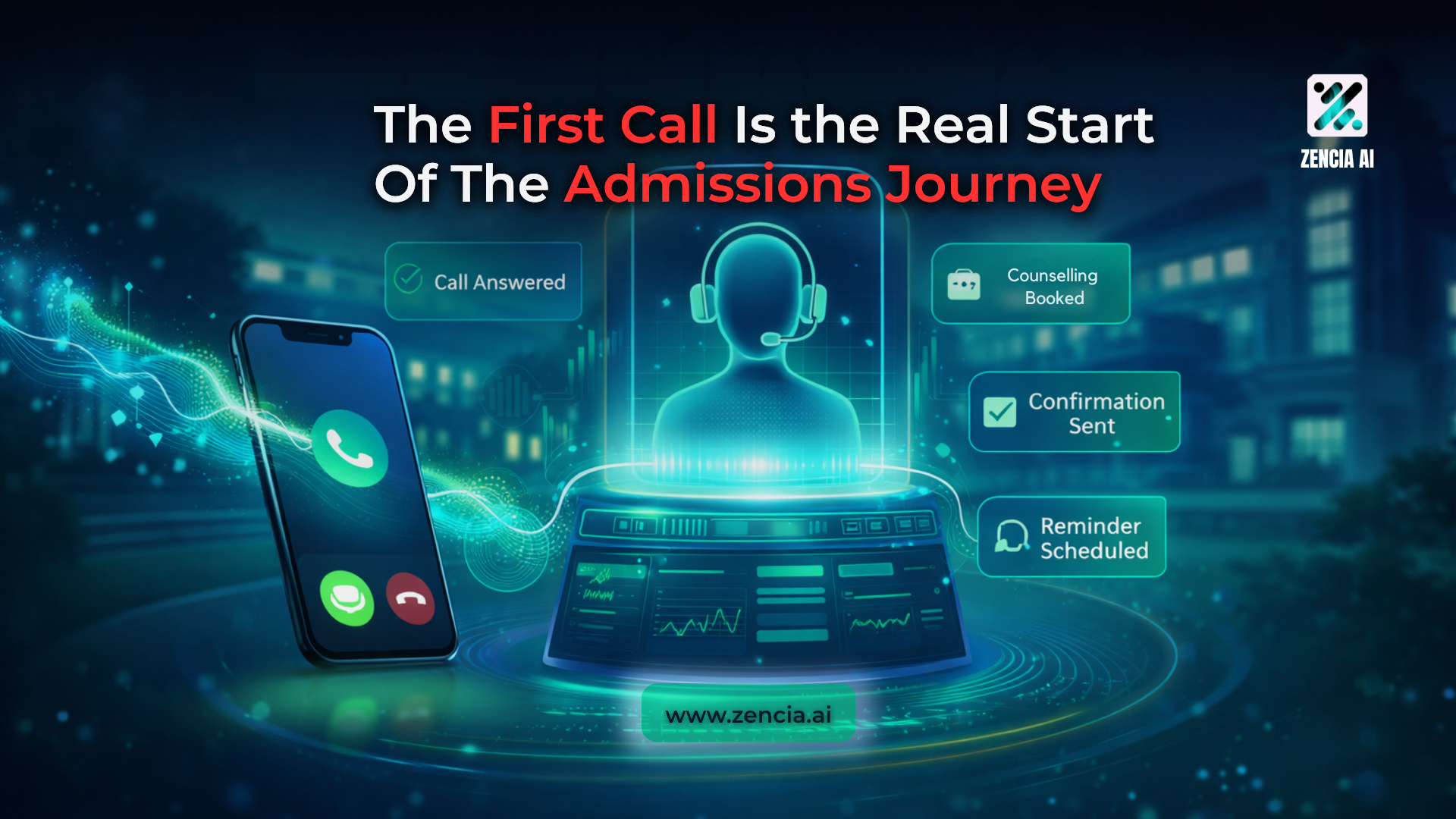
The First Call Is the Real Start of the Admissions Journey
For most students, the first call is not casual. It usually happens after some research. They’ve shortlisted a few institutes and are trying to understand fees, schedules, outcomes, and whether the place feels trustworthy. That first interaction sets the tone. If the call is answered quickly and the conversation feels smooth, the institute instantly feels more credible. If the call is missed, kept on hold, or rushed because the team is busy, the student assumes they’ll get the same experience later and often chooses another option.
In many cases, the institute never even knows a potential student tried to reach out.
Why More Marketing Doesn’t Automatically Mean More Admissions
When admissions numbers slow down, the natural reaction is to increase marketing. More ads, more leads, more visibility. But this only works if the system handling enquiries can keep up.
During peak seasons, front-desk and admissions teams are stretched thin. Walk-ins, counselling sessions, paperwork, and calls all compete for attention. Some calls are missed. Some enquiries are noted down but not followed up properly. Some students are told to call back later and they don’t.
From the outside, it looks like a marketing problem. In reality, it’s a response and follow-up problem.
Common Points Where Enquiries Drop Off
Across many institutes, the same issues show up again and again:
- Enquiry calls go unanswered during busy hours or after office hours
- Students are asked to wait or call back later
- Counselling or demo sessions are not booked during the first interaction
- There are no reminders before scheduled counselling sessions
- Enquiry details are scattered, making follow-ups inconsistent
Each of these may seem small on its own. Together, they create a leaky admissions funnel where interested students slowly disappear.
Treat Enquiry Calls as Part of the Admissions Funnel
Calls are not just “support.” They are a core part of how students decide. The way an institute handles that first conversation reflects how organized and student-friendly it is. Institutes that perform better on admissions often:
- Ensure calls are answered consistently
- Capture basic details in a structured way
- Book counselling sessions during the first call
- Send confirmations and reminders so students don’t forget
- Maintain a clear view of enquiry status for follow-ups
This doesn’t require more staff it requires better systems and processes around how enquiries are handled.
Scaling Enquiry Handling Without Overloading Teams
As enquiry volume grows, it becomes unrealistic to expect small teams to manage every call perfectly, especially outside working hours or during peak periods. This is where many institutes are now adopting real-time voice systems to support their teams ensuring that calls are answered, details are captured, counselling slots are scheduled, and reminders are sent even when staff are busy. The intention isn’t to replace human counsellors. It’s to make sure interested students don’t fall through the cracks before a real conversation can happen.
Fix the First Touchpoint Before Increasing Spend
Before increasing your marketing budget for the next admissions cycle, it’s worth reviewing one simple question: what actually happens when a student calls your institute today?
Often, improving that first touchpoint has a bigger impact on enrollments than launching another campaign. When calls are handled well, marketing finally gets the chance to do its job.
Our platform Zencia.AI is designed for this exact stage of the admissions journey handling enquiry calls in real time, booking counselling sessions, sending confirmations and reminders, and keeping systems updated automatically, so high-intent students don’t slip away before the first meaningful interaction.